


Short answer: Modern bathroom tile is defined by clean lines, a limited palette and fewer visual breaks. The most popular approaches are large-format tile with thin grout lines, simple geometric shapes such as hexagons, monochrome color schemes, stacked or herringbone layouts, and half-tiled walls. Choose porcelain for wet areas, check the slip rating on any floor tile, and treat waterproofing behind the tile as part of the design.
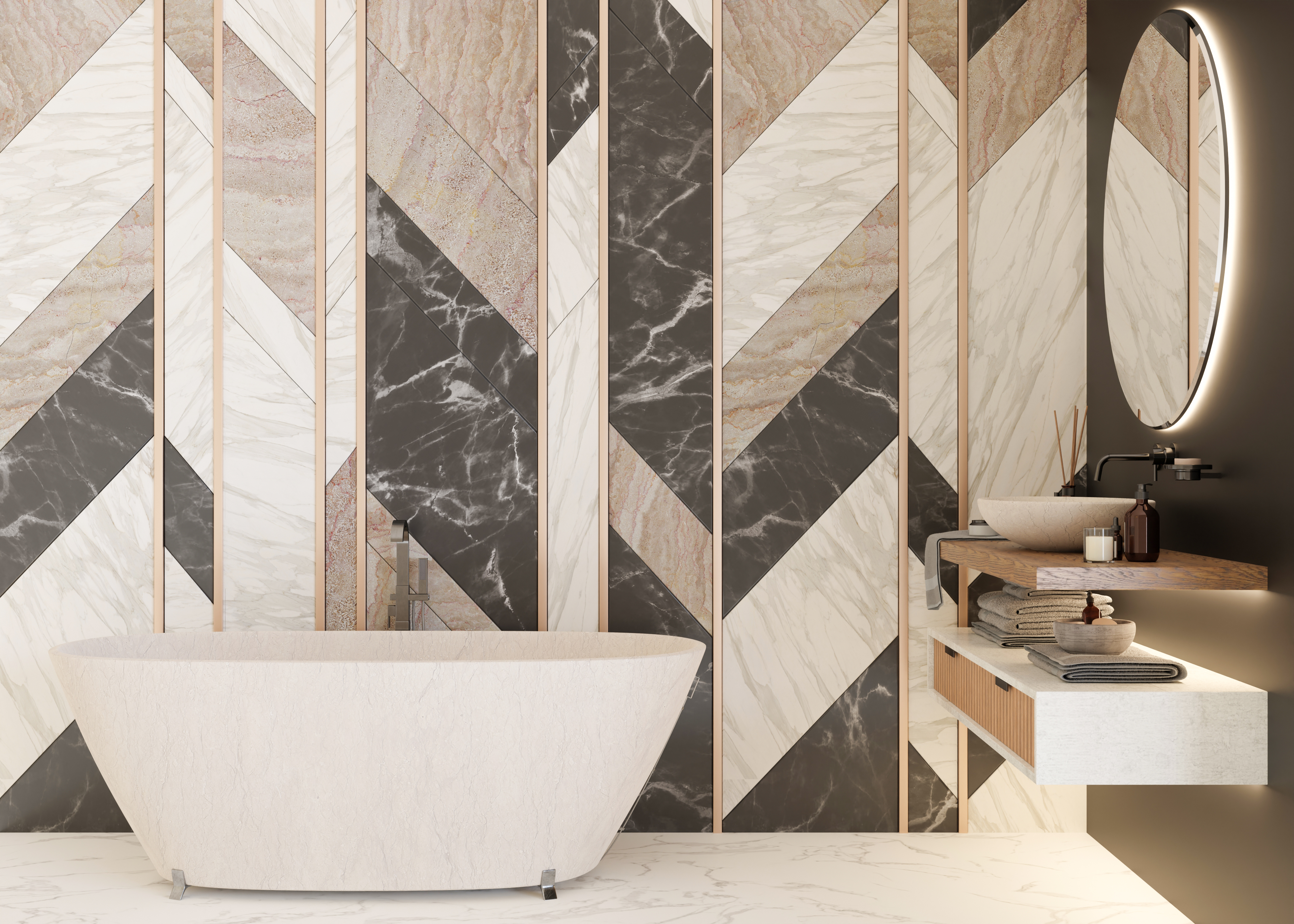
What makes bathroom tile “modern”
Modern design is more about restraint than a specific tile. Look for:
- Straight lines and simple layouts. Stacked, grid or herringbone patterns.
- A neutral base. White, beige, gray and black, with earthy accents.
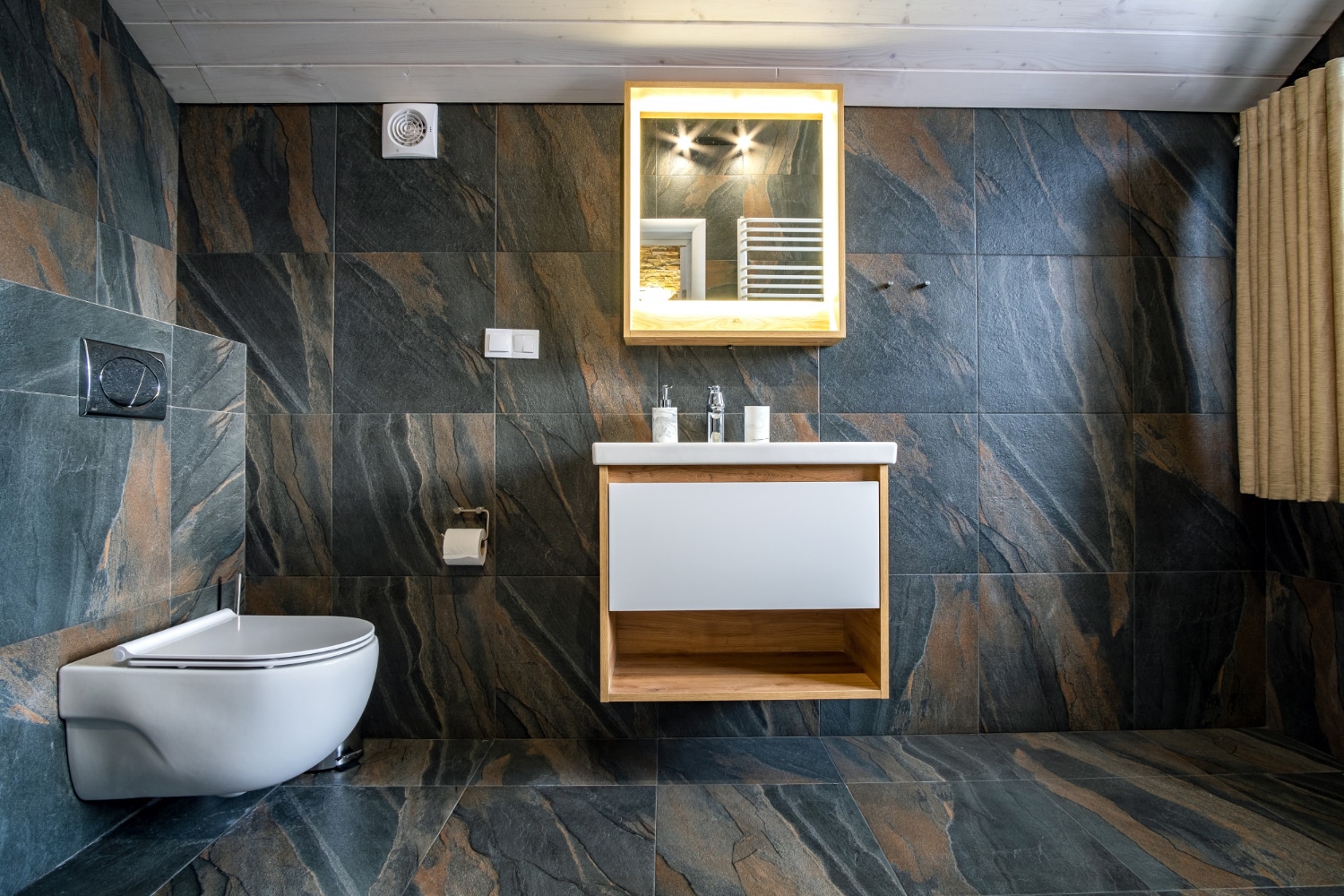
- Fewer, larger tiles or continuous surfaces with narrow grout joints.
- Frameless glass and clean fixtures. Hardware that stays out of the way.
- Texture instead of pattern. A subtle surface (fluted, matte, stone-look) rather than loud color.
Trend 1: Large-format tile
Large tiles mean fewer grout lines, so surfaces look calm and continuous. The Tile Council of North America defines large-format tile as any tile with an edge of 15 inches or longer.
What to know before you choose it:
- The surface underneath has to be flat. Published guidance cites about 1/8 inch in 10 feet for large-format tile, tighter than for small tile. Uneven floors and walls cause lippage, where tile edges sit at different heights. Ask your installer how they will prep the surface, and who is responsible for it.
- Thinset method matters. Guides recommend medium-bed mortar for large tile to compensate for small height differences.
- Narrow grout joints show every flaw. Layout and installer skill make the difference.
- Large tiles are harder to fit around niches, corners and slopes. A small shower floor usually needs smaller tile or mosaic so the floor can slope to the drain.
Sources: Fine Homebuilding on large tile and Construction Specifier on lippage. Check the current TCNA Handbook and ANSI A108 for exact requirements on any job.
Trend 2: Geometric shapes
- Squares. Classic, and modern when set in a straight grid with matching grout, or laid on a diagonal with contrasting grout.
- Hexagons. Work on floors and shower walls. Large hexes feel contemporary. Small hexes add a honeycomb texture.
- Triangles and diamonds. More graphic. Use them on one feature wall or a floor, not everywhere.
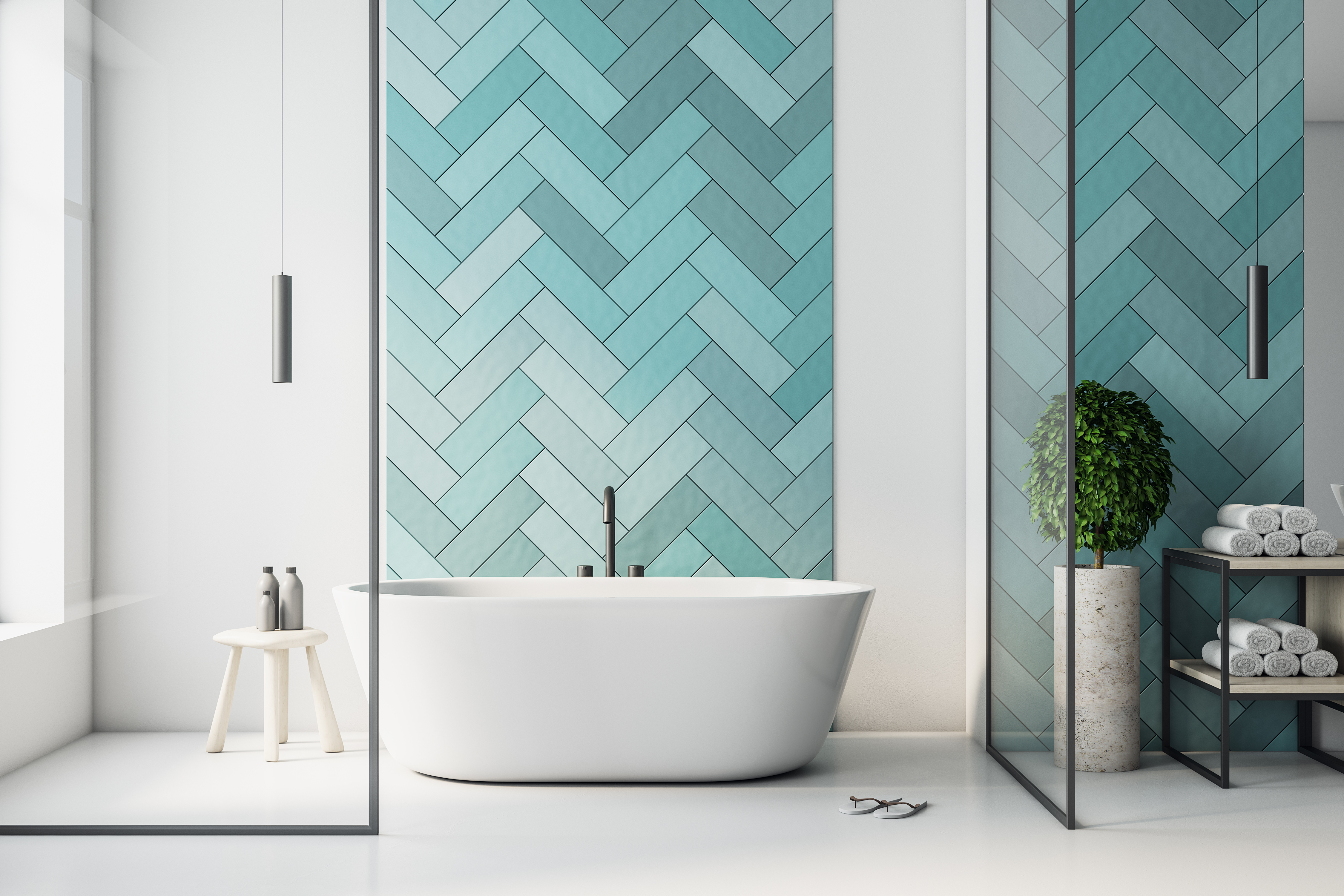
- Rectangles in herringbone, chevron or stacked layouts. Same tile, very different feel.
Shape and layout change cost, since complex patterns take more cutting and installer time.
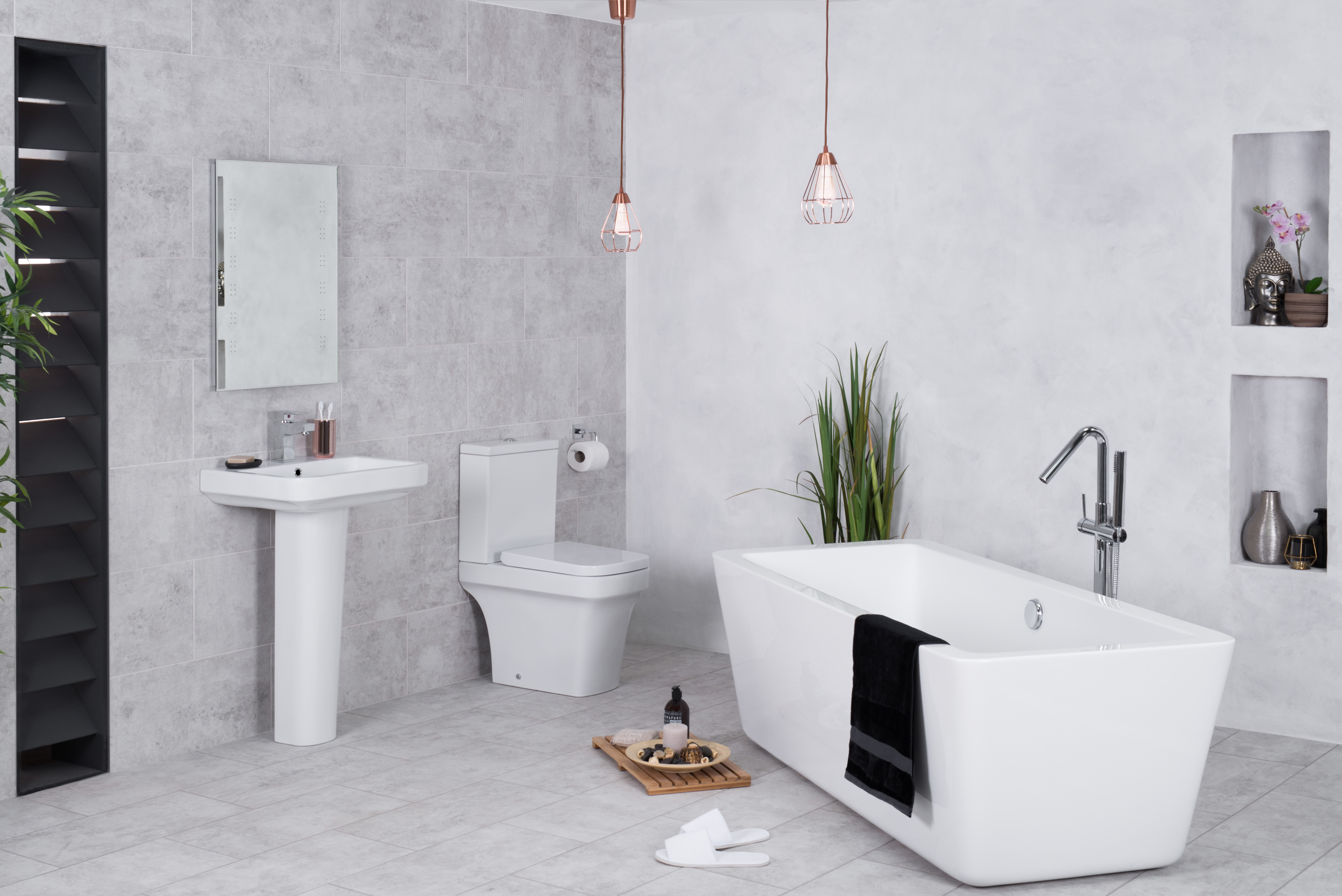
Trend 3: Monochrome palettes
Using one color family in different tones (soft grays, warm whites, deep blues) adds depth without clutter. Vary finish and size rather than color: a matte floor, a glossy wall, and a textured accent strip in the same family. This approach reads as calm, which suits a spa-like bathroom.

Trend 4: Half-tiled walls
Tile on the lower half of the wall and paint above is a practical, current look.
- Where it works well. Powder rooms, around vanities and in rooms with limited splash zones.
- Why people like it. The tiled area handles moisture and wiping, and the painted area adds warmth and color. It also uses less tile than a full wall.
- Use a moisture-resistant paint and a bathroom-rated primer on the upper wall, and make sure the room has a working exhaust fan.
- Wet areas still need full tile. Showers and tub surrounds should be tiled to a sensible height over a proper waterproof system, not stopped at half height.
- Where the line goes. Chair-rail height is traditional. A higher line (about eye height or taller) feels more modern. Keep the line consistent throughout the room.
Shower tile ideas
Showers are the best place to make a statement, and the main place where tile choices affect performance.
- Continuous tile on floor and walls. Using the same large porcelain on walls and floor creates a seamless, “wet room” feel. Floors need a tile size that can follow the slope to the drain, so many designs switch to a smaller mosaic or use a linear drain with a single-slope floor.
- White subway or stacked tile, black accents. Black-and-white subway, horizontally stacked or vertically stacked, is a modern classic. See our black and white tile bathroom guide.
- Neutral herringbone. Soft gray or white rectangles in herringbone give texture without color.
- Hex or penny mosaic floors. Small tiles follow slopes and give more grip underfoot.
- Stone-look slabs or large panels. Fewer joints and a continuous look. Porcelain versions are common and need less upkeep than natural stone. Check the care sheet.
- Contrast niche. Use a different tile or a matching tile in another orientation inside the niche to set it apart.
- Chevron floor with simple walls. A bold floor with plain walls keeps the room balanced.
Pair showers with the right glass. A frameless glass panel keeps the tile visible. See our shower doors options.
Porcelain or ceramic?
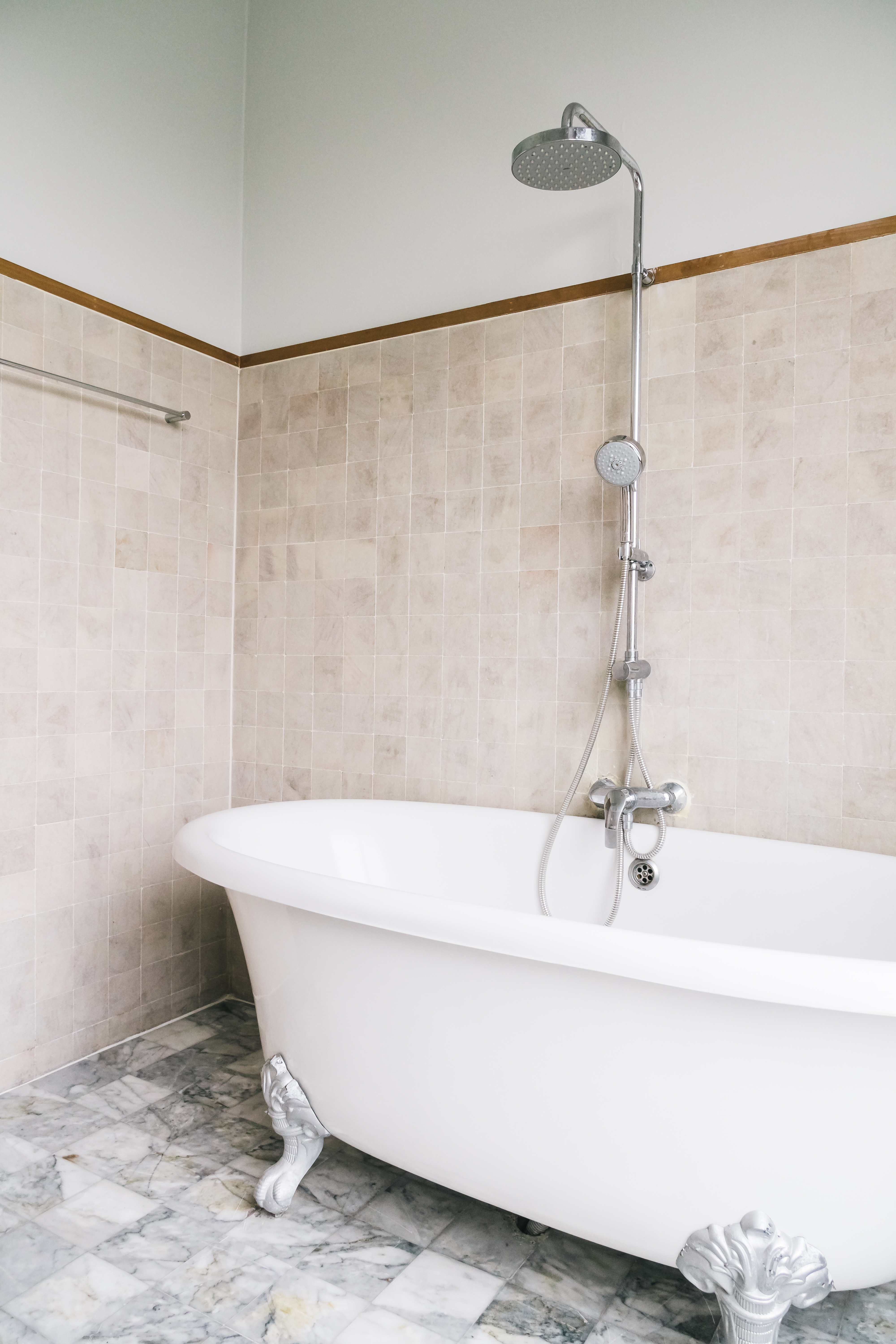
Under ANSI A137.1, porcelain is a ceramic tile with water absorption of 0.5% or less, tested by ASTM C373 (ANSI blog). Porcelain is generally the better choice for showers, floors and other wet places. Standard ceramic is common on walls and backsplashes, and is often easier to cut. Many modern products are porcelain, including stone-look and wood-look styles.
Make floor tile safe
Check the DCOF (dynamic coefficient of friction) on any bathroom floor tile. ANSI A137.1 sets a wet DCOF of at least 0.42 for tile used on level interior areas walked on when wet, according to Daltile. No tile is slip-proof. Matte or textured finishes are the safer choice on floors. Reserve high-gloss tile for walls.
Waterproofing comes first
Tile and grout are not a waterproof system on their own. Cement-based grout is porous, and the waterproof layer behind the tile does the real work (BRANZ, Angi). Membrane systems such as Schluter KERDI are one approach. When you compare proposals, ask how the shower and tub area will be waterproofed, how the floor will slope to the drain, and how mold-prone areas will be handled. Removing old tile also means checking what is behind it for moisture damage.
Grout and finishing
- Match grout to tile for a seamless, modern look.
- Contrast grout (dark on light tile) draws attention to the pattern.
- Narrow joints suit large, precisely cut tile (rectified edges).
- Silicone, not grout, at corners and changes of plane, so movement does not crack the joint.
- Edge trim. A metal or stone edge profile gives a clean finish on exposed tile edges.
What affects cost
We do not publish prices for projects. The factors that move cost most are:
- Tile material, size and finish. Premium porcelain and natural stone cost more than basic tile.
- Pattern complexity. Herringbone, chevron and mosaics take more time.
- Surface prep. Leveling and flattening floors and walls.
- Waterproofing system and shower construction.
- Niches, benches, glass and plumbing fixtures.
- Demolition and repair of damage found behind old tile.
If you are selling soon, tile choices that read as clean and current help a bathroom show well, but neutral and well installed matters more than trendy. Ask for a detailed written proposal that lists each item.
Related: See bathroom remodeling, bathroom vanities and bath tubs.

See tile in person
Our Fairfax showroom at 3204 Old Pickett Rd has tile, vanities, cabinets and countertops. Bring a sample of your cabinet or paint color and compare it with tile in the room’s own light. See the showroom page. Our in-house installers do the work, with a dedicated project manager and permits handled for you. We are licensed and insured, and our work carries a 5-year workmanship warranty. Hex or small-format tile for a shower floor and large-format for walls is a combination we can walk you through in the showroom.
FAQ: Modern bathroom tile
What tile is best for a modern bathroom?
Large-format porcelain with thin grout lines is the most common modern choice, along with hexagon mosaics and stacked or herringbone layouts. The best choice depends on your room size and how wet the area is.
Can I mix different tile styles in one bathroom?
Yes. Keep a common color family or material and vary size or pattern. For example, large tile on walls with a small hex floor, or a half-tiled wall with painted upper walls.
Is large-format tile hard to install?
It needs a very flat surface and a skilled installer. Poor prep leads to uneven edges, so ask how the substrate will be flattened.
Are modern tiles expensive?
It depends on the material, size, pattern and installation. Complex layouts and extra prep add labor. Ask for an itemized proposal.
Should I use gloss or matte tile?
Matte or textured on floors for traction, gloss on walls where light reflection helps.
Design your modern bathroom
Book a free design consultation at City Kitchen & Bath, or call (703) 552-5252. Open Mon to Fri 9:00 a.m. to 5:00 p.m. and Sat 10:00 a.m. to 4:00 p.m.
