


Natural stone flooring is a good choice if you want a durable, one-of-a-kind floor and accept some upkeep. It lasts for decades when it is installed on a flat, stiff subfloor and cared for correctly. Granite, slate and some limestones handle heavy use well. Marble and travertine are softer and need more care. Stone is cold underfoot and can be slippery when wet, so the finish matters as much as the type.

What counts as natural stone flooring
Natural stone flooring is stone quarried from the earth and cut into tile or slabs. It is finished by honing, polishing, tumbling or cleaving, but not manufactured. Because each piece is different, floors have natural variation in color and pattern, and tiles from different boxes should be mixed during installation.
Common types of stone flooring
| Stone | Look | Good for | Be aware |
|---|---|---|---|
| Marble | Veined, classic | Dry rooms, entries, primary baths | Etches and scratches; polished versions get slippery |
| Granite | Speckled, hard | Entries, kitchens, high traffic | Heavy; polished finish can be slick when wet |
| Slate | Layered, earthy | Entries, mudrooms, bathrooms | Surface can be uneven; may flake |
| Limestone | Soft, beige | Living areas, kitchens with a honed finish | Softer; etches; needs sealing |
| Travertine | Banded, pitted | Warm, traditional spaces | Holes are normally filled; needs sealing |
Marble
Marble gives a bright, formal look. It is calcareous, so acids dull it. The Marble Institute of America advises against vinegar and lemon juice-based cleaners on marble and other calcareous stone, and notes that common foods and drinks can etch the surface (Laticrete, stone cleaning tips). Honed marble hides wear better than polished.
Granite
Granite is hard and holds up to traffic. It is less common as flooring than as countertops because it is heavy and often sold in slabs. Granite tiles are available, and a flamed or honed finish improves traction.
Slate
Slate is a fine-grained rock that splits into layers, giving it a natural cleft texture. That texture can add grip, but it also makes the surface uneven, so cleaning takes more effort. Slate suits mudrooms and entries.
Limestone
Limestone has a calm, warm tone and sometimes shows fossils. It is softer than granite and slate. A honed finish with a good sealer is the usual choice indoors.
Travertine
Travertine forms in mineral springs and has natural pits and bands. Fabricators usually fill the holes and hone the surface. Like limestone and marble it is calcareous, so it etches.

Pros and cons of natural stone floors
Pros
- Long life. Stone floors can last for generations with care.
- Unique look. No two tiles match.
- Pairs with radiant heat. Stone conducts heat well, which helps with in-floor heating. Check the heating manufacturer’s guidance.
- Easy to keep clean day to day once sealed.
Cons
- Cold underfoot. Radiant heat or rugs help.
- Slip risk. Slip resistance depends on the finish. For tile used where it will be walked on wet, the standard benchmark is a wet DCOF of at least 0.42 under ANSI A326.3 (Daltile on DCOF). Natural stone is often not rated, so ask your supplier for test data or choose honed, flamed or textured finishes in wet areas. No tile is slip proof.
- Needs a stiff floor. Stone can crack if the subfloor flexes. Floor framing and underlayment need to be checked before installing, which matters in older Northern Virginia homes.
- Needs sealing. Stone is porous to some degree.
- Hard on dropped dishes and tired feet.
- Variation. Color and veining differ between pieces and shipments. Review the tile in person.
Where to use stone flooring
- Entry and mudroom. Slate or honed granite handles dirt and boots.
- Kitchen. Honed limestone or granite tile. Consider the cold underfoot and the hardness for standing.
- Bathroom. Honed or textured stone, with a sealer, and small tiles or mosaics on shower floors for traction. Marble is common in primary baths if you accept etching.
- Living areas. Large-format stone tile makes a calm, continuous surface.
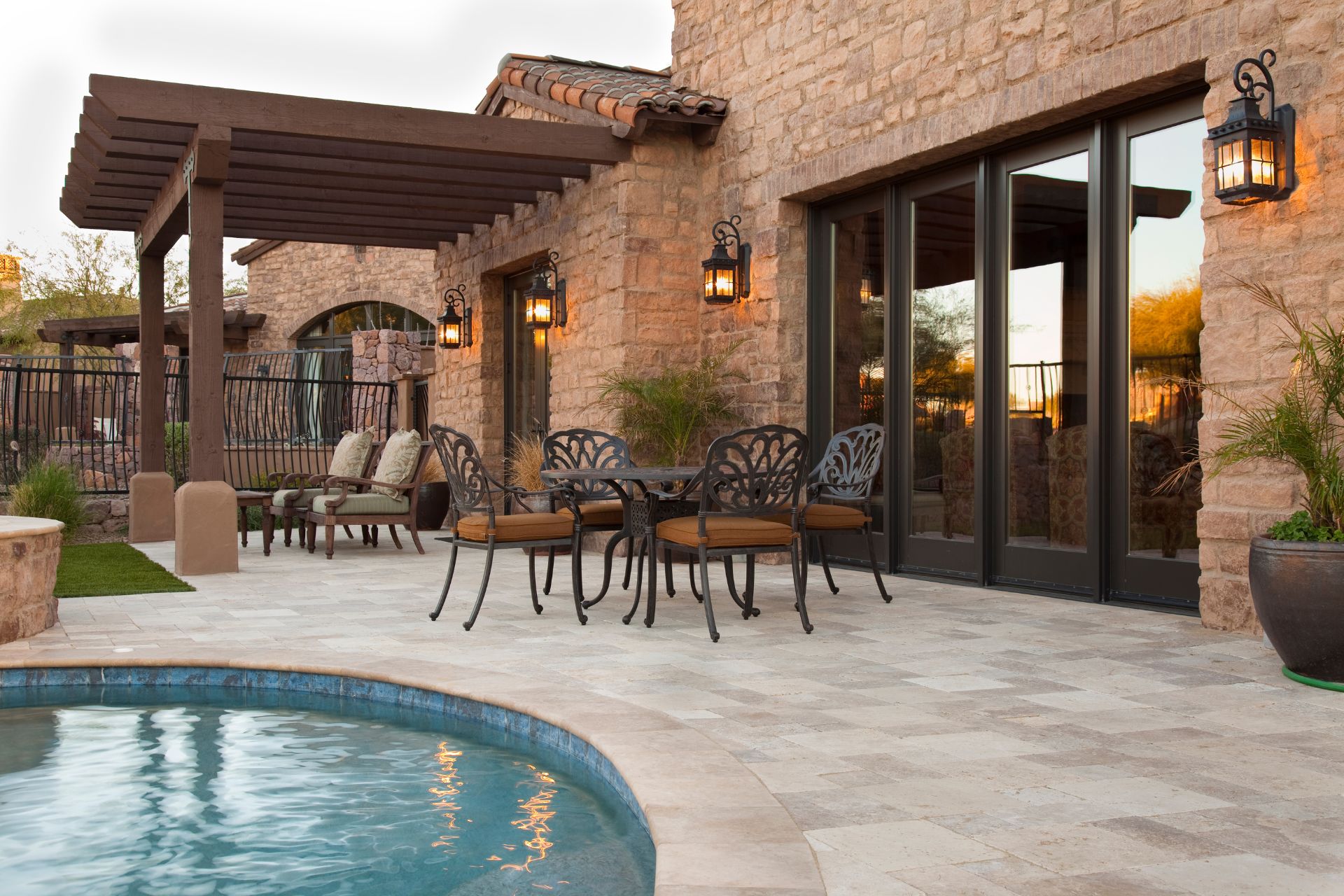
- Patio. Choose a stone made for exterior use, since not every stone handles freeze-thaw.
Stone tile vs. porcelain that looks like stone
Porcelain is man-made and has a stable, uniform surface. Many porcelains imitate marble or slate well and do not need sealing. If you want the look of stone with less maintenance, porcelain is a fair alternative. If you want the real thing and its variation, choose stone. See our tile and hardwood page and our flooring page for what we offer.
Care and maintenance
- Seal after installation and as the sealer’s label directs.
- Use stone-safe, pH-neutral cleaners. Avoid vinegar, lemon and abrasive powders on marble, limestone and travertine.
- Wipe spills quickly. Sealing buys time. It does not stop etching.
- Use mats at entries to keep grit off the stone.
- Dry the surface after cleaning.
- Ask about grout. Cement-based grout is porous and benefits from sealing. Pick the grout color to suit the stone.
What installation involves
Stone tile installation takes more preparation than most floors. Installers check the subfloor for flatness and deflection, set the tile with the proper mortar, back-butter larger tiles for full coverage, and leave time to cure before grouting and sealing. Heavier stone may need floor framing checked, especially in upper floors and older homes. Natural variation means tiles are laid out dry first and blended from several boxes so that color and veining look balanced. Ask your installer how they handle this step, since a rushed layout is the most common reason a stone floor looks patchy.
Cost factors
We don’t quote prices in blog posts. Price depends on the stone, thickness, finish, tile size, subfloor repair, layout pattern and labor. Large-format tile and complicated patterns take longer to install. Stone also requires a flat substrate, which can add work. We give a written proposal after a site visit.
Related: Natural stone for kitchens and white kitchen floor tiles.
Working with us
Our natural stones page shows materials we work with, and our showroom has tile samples. If a stone floor is part of a kitchen or bath remodel, our kitchen remodeling team handles design, permits and in-house installation. We are licensed and insured in Virginia with a 5-year workmanship warranty.
FAQs about natural stone flooring
How long does natural stone flooring last?
With proper installation and care, decades. Soft stones such as marble and travertine show wear sooner than granite or slate.
Is natural stone flooring slippery?
It can be when wet, especially polished. Honed, flamed or textured finishes give more grip. Ask for the product’s wet DCOF if available.
Does stone flooring need sealing?
Most do. Sealing reduces staining. It doesn’t prevent acid etching on marble, limestone or travertine.
Is stone flooring good with radiant heat?
Stone conducts heat well, so it often pairs well. Follow the heating manufacturer’s instructions and check with your installer.
Natural stone or porcelain?
Stone gives true variation and needs sealing. Porcelain is uniform and easier to maintain. Choose by look and upkeep.
Next step
Book a free design consultation and bring a photo of the room. We will show you samples and check the subfloor. Showroom: 3204 Old Pickett Rd, Fairfax, VA 22031. Call (703) 552-5252 or contact us. Hours: Mon-Fri 9:00 a.m.-5:00 p.m., Sat 10:00 a.m.-4:00 p.m.
Sources: Laticrete, stone cleaning tips (Marble Institute of America guidance); Daltile, What is DCOF.
